
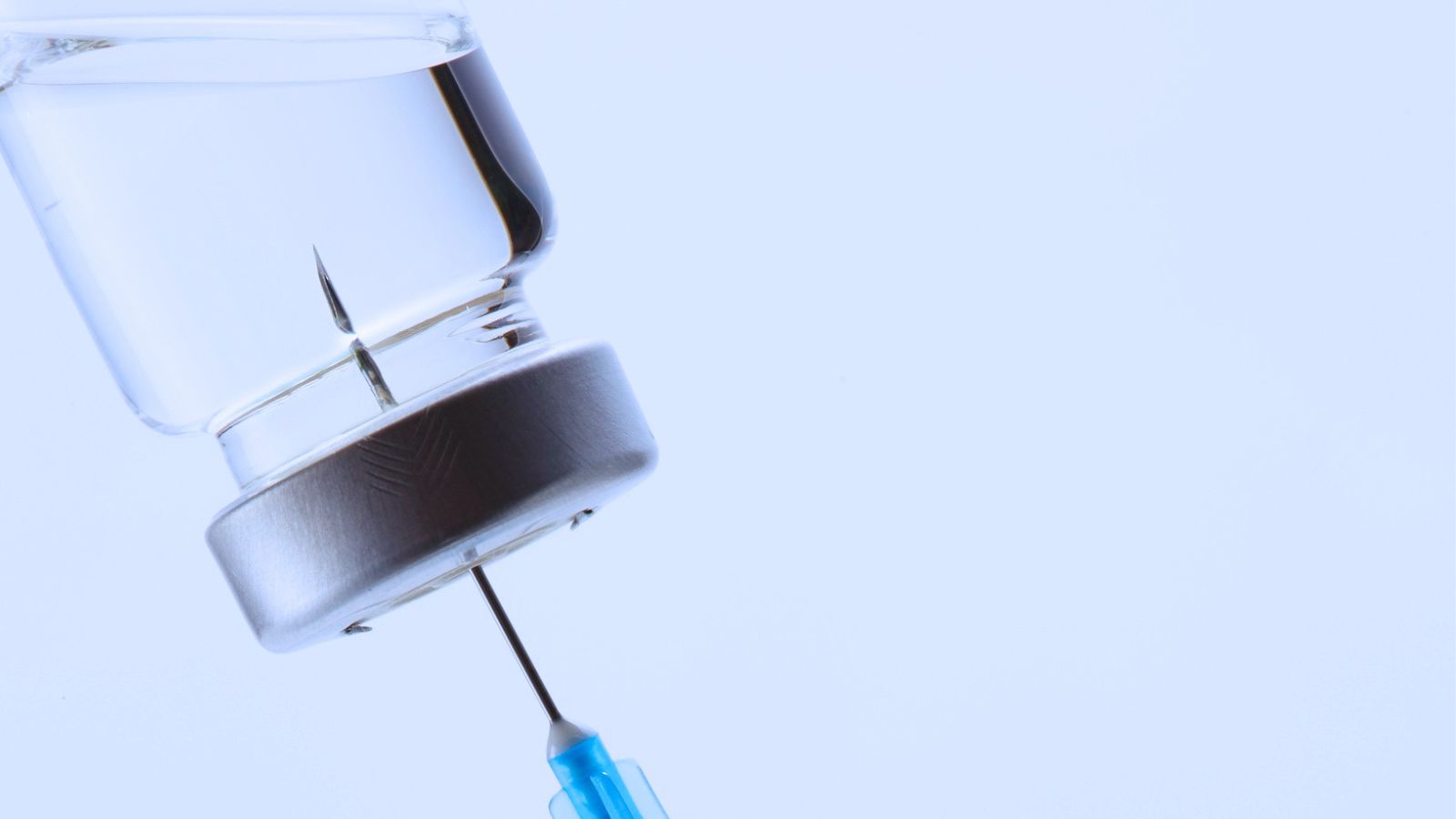
Reconstitution is a short procedure with a small number of ways to go wrong, and the errors are mostly avoidable. This covers solvent choice, technique, concentration arithmetic and storage of the resulting solution.
Choosing a solvent
Start with the solubility stated on the product page for the specific compound. It varies, and assuming the whole catalogue behaves the same way is the most common reason someone ends up with a cloudy vial that will not clear.
The usual options:
- Bacteriostatic water. Sterile water with 0.9 percent benzyl alcohol as a preservative. The default for most research peptides where the solution will be stored rather than used immediately.
- Sterile water for injection. No preservative. Appropriate where the benzyl alcohol would interfere with an assay, but the solution has a much shorter usable life.
- Acetic acid, dilute. For peptides that are poorly soluble at neutral pH. Basic peptides frequently need it.
- Ammonium hydroxide or ammonium bicarbonate, dilute. For acidic peptides that resist dissolving in water.
- DMSO. Effective for hydrophobic peptides and a last resort rather than a first choice, because it interferes with a lot of assays and is difficult to remove.
Work out solubility from the peptide’s composition if it is not stated. A sequence dominated by acidic residues generally dissolves better in a slightly basic solution, and one dominated by basic residues in a slightly acidic one.
Technique
Let the vial reach room temperature before opening. Adding solvent to cold material encourages condensation, and moisture is one of the things a lyophilised peptide is being protected from.
Add the solvent slowly, directing it down the inside wall of the vial rather than onto the cake. A stream landing directly on the material applies mechanical stress to a peptide that has been carefully freeze dried to avoid exactly that.
Then leave it. Most peptides dissolve on their own in a minute or two. Swirl gently if it needs help.
Do not shake. Do not vortex unless a protocol specifically requires it. Do not sonicate to speed things up. All three introduce shear forces and foaming, and foaming is a good visual indicator that you are damaging the peptide, because the bubbles are forming at a protein-air interface where the molecule is denaturing.
If it has not dissolved after a few minutes, give it longer at room temperature before reaching for anything more aggressive.
Concentration arithmetic
The arithmetic is straightforward and worth doing before you open anything, because you cannot undo it afterwards.
A 10mg vial reconstituted with 2ml of solvent gives 5mg per ml. Reconstituted with 1ml it gives 10mg per ml. Choose the volume that puts your working concentration somewhere convenient to measure rather than at the limit of your pipette.
Small volumes are the usual error. Reconstituting a 10mg vial in 0.5ml gives a very concentrated solution and every subsequent measurement carries more error, because a small pipetting inaccuracy is a large proportional one.
A cloudy solution
Almost always the wrong solvent rather than a bad batch. Peptides that will not dissolve in water frequently dissolve immediately in dilute acetic acid, and the reverse is true for acidic sequences.
Adding more of a solvent that is not working does not help. Adding a small amount of a different one usually does.
Particulate that will not disperse at all, as opposed to a general cloudiness, is worth raising with the supplier with the batch reference.
Storing the solution
The shelf life on the product page applies to the sealed lyophilised vial. Once a peptide is in solution, that figure no longer applies. Depending on the compound, the solvent and the temperature you are looking at weeks rather than months, and sometimes days.
Aliquot before freezing. Split the reconstituted solution into single use volumes so each working session thaws one aliquot and the rest is untouched. It takes ten minutes once and it is the single most effective thing you can do to protect a compound after reconstitution.
Label every aliquot with the compound, the concentration and the date. Six identical unlabelled tubes in a freezer is a problem that arrives about three weeks later.
Common errors
- Reconstituting the whole vial when the protocol needed a fraction of it
- Adding solvent straight onto the cake at speed
- Shaking to speed up dissolution
- Freezing the whole reconstituted volume, then thawing it repeatedly
- Using the shelf life on the product page for the reconstituted solution
- Not labelling aliquots
Related reading
Storage conditions before and after reconstitution are covered in the storage and handling guide. If you are unsure what the purity figure on your certificate covers, the certificate walkthrough goes through it section by section.