
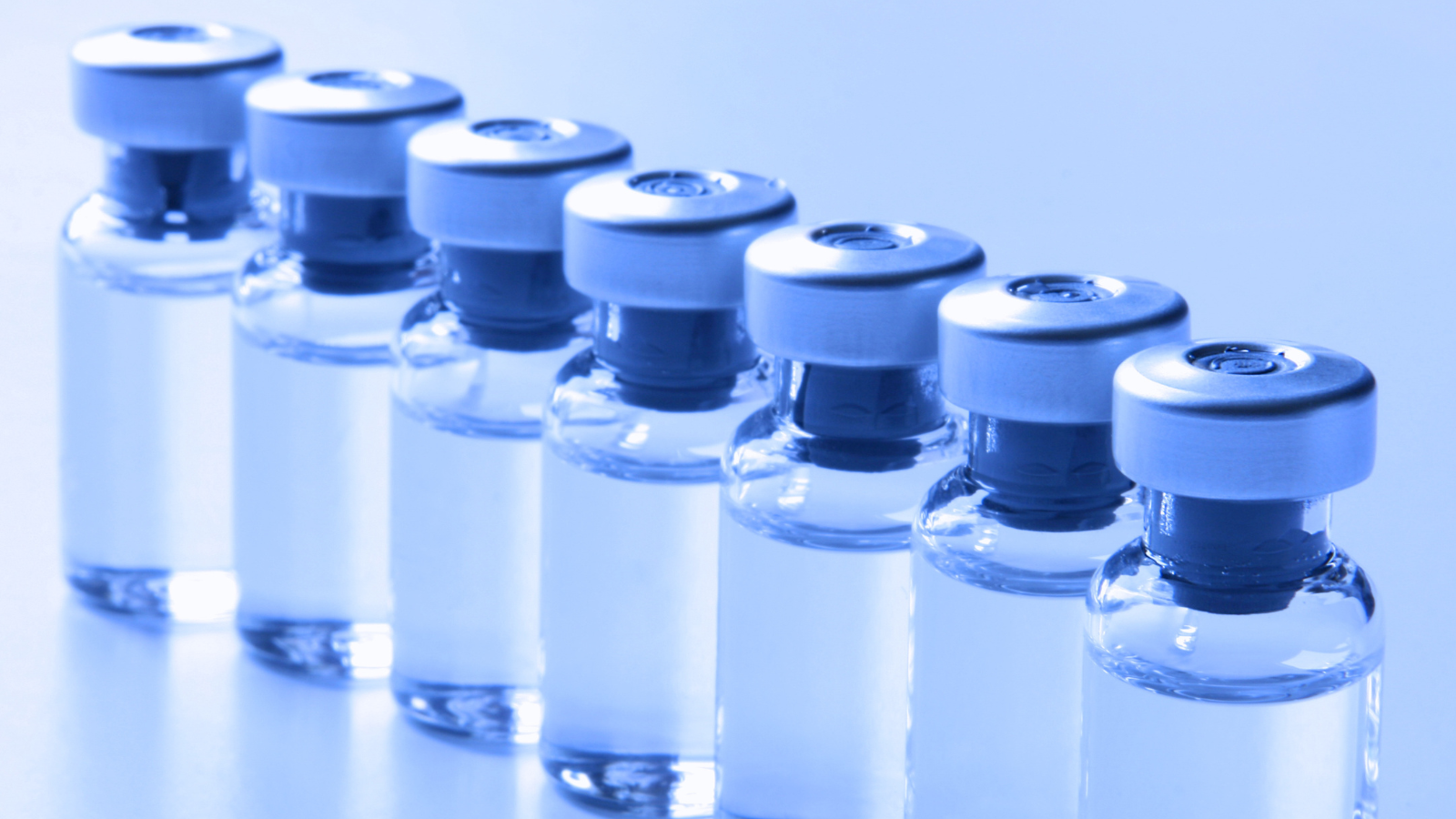
Storage is where most compounds are lost, and almost always in the first hour rather than over the following months. This covers what to do on arrival, what the stated conditions mean, and the handling mistakes that come up most often.
On arrival
Open the parcel the day it arrives and put the contents into storage at the condition stated on the product page. Not later that afternoon, and not once you have finished what you are doing. A cold chain item that has already spent a day in transit has used up whatever margin it had.
Check the batch reference on the label against the certificate before anything goes into a freezer. It is considerably easier to resolve a mismatch while the packaging is still in front of you.
Lyophilised, before reconstitution
Most peptides in this catalogue arrive lyophilised, freeze dried into a solid cake in the base of the vial. In that state they are relatively robust. Sealed, cold and away from light, a lyophilised peptide will hold its stated shelf life comfortably.
The conditions that matter are temperature, light and moisture, in that order. Frozen storage at minus twenty is the default for peptides here. Some items, NAD+ among them, are refrigerated rather than frozen. The specification table on each product page states which applies, because it varies by compound and guessing from the group is how people get it wrong.
After reconstitution
Once a peptide is in solution the picture changes entirely. Shelf life drops from months to weeks or days depending on the compound, the solvent and the storage temperature. Treat the shelf life on the product page as applying to the sealed lyophilised vial only.
Reconstitution
Add solvent slowly and down the inside wall of the vial rather than directly onto the cake. Peptides are sensitive to mechanical stress and directing a stream straight onto the solid damages material before you have started.
Swirl gently to dissolve. Do not shake, do not vortex unless the protocol specifically calls for it, and do not sonicate to speed things up. If a compound is dissolving slowly, give it time at room temperature rather than applying energy to it.
Solubility is stated on each product page. Most peptides here go into bacteriostatic water. Some need a different solvent, and using the wrong one produces a cloudy solution that will not clear however long you wait.
Freeze thaw cycles
Every freeze and thaw cycle costs you a little material. One or two is generally tolerable. Five or six is not, and by then you are working with something meaningfully different from what the certificate describes.
The practical answer is aliquoting. Split a reconstituted vial into single use volumes before freezing, so each session thaws one aliquot and the rest stays untouched. It takes ten minutes once and saves the compound.
Light
Amber vials, foil, or simply a closed box. Light exposure is cumulative and mostly matters over weeks rather than during the minute a vial spends on the bench. Do not leave anything sitting under a lamp.
Shelf life in practice
Stated shelf life assumes the compound has been held at the stated condition throughout. A vial that has been out of the freezer three times for an hour each has not been, and its remaining life is shorter than the label says by an amount nobody can calculate for you.
If a compound has been mishandled, the useful question is not whether it has expired but whether it still behaves as expected against a control. Run one.
Common mistakes
Storing a refrigerated compound in the freezer because everything else in the box went in there. Reconstituting a whole vial when the protocol needed a fraction of it. Leaving a parcel in a postroom over a weekend. Assuming shelf life restarts on the day of delivery. All four are recoverable if you catch them, and none of them are if you do not notice.