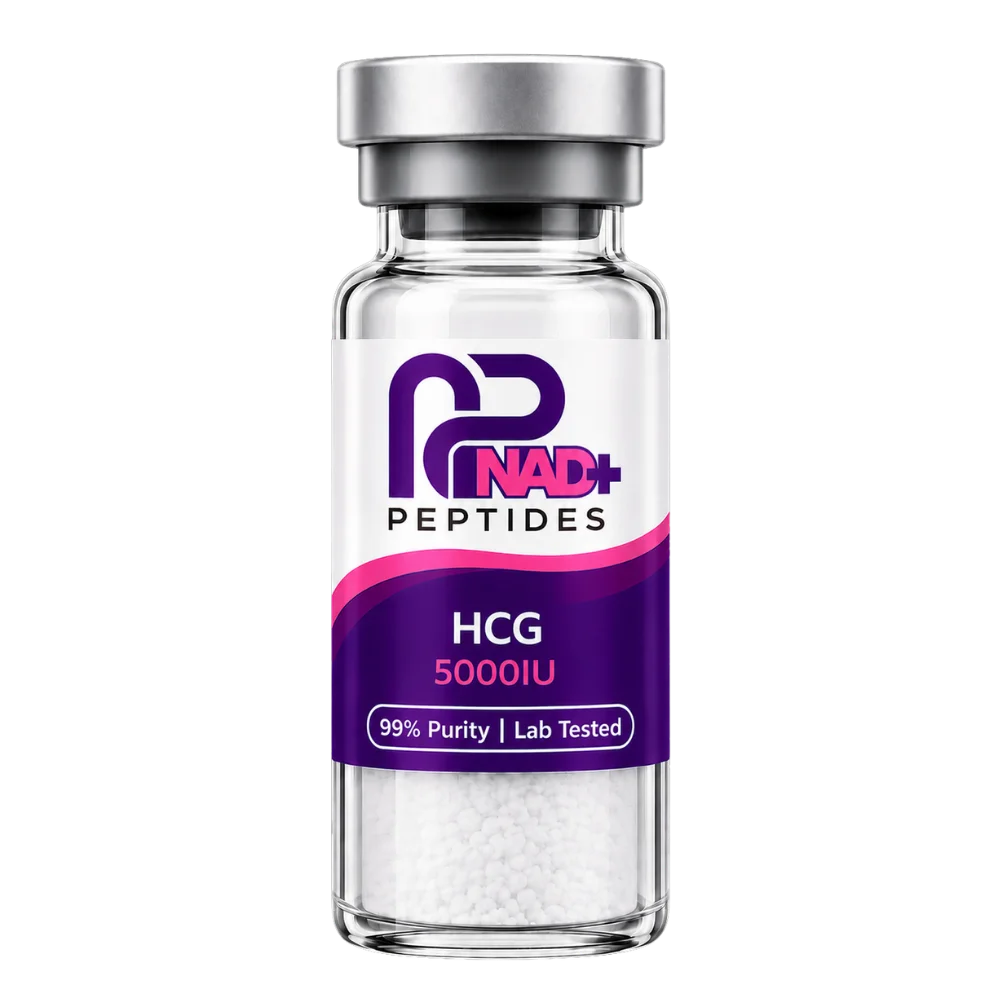
HCG 5000IU
Identity
- CAS number
- 9002-61-3
Physical form
- Appearance
- White lyophilised powder
- Purity
- 99%+ (HPLC)
- Solubility
- Soluble in bacteriostatic water
Handling
- Storage
- 2C to 8C, protected from light
- Shelf life
- 24 months from date of manufacture, sealed
Also known as Human chorionic gonadotropin, Chorionic gonadotrophin
Glycoprotein hormone, 5000IU. Refrigerated. Subject to UK regulatory control, read the listing before ordering.
- Dispatch Same day if you order before the cut off, tracked all the way
- Documentation Your batch certificate lands in your inbox the moment it ships
- Storage 2C to 8C, protected from light
Please note: hCG is a prescription only medicine in the UK. Please check your own position before ordering.
Product description
Human chorionic gonadotropin, a glycoprotein hormone composed of an alpha and a beta subunit. Supplied lyophilised as a 5000IU vial.
Research context
HCG is used in laboratory receptor binding and assay work. As a glycoprotein with two distinct subunits its analytical profile differs from the single chain peptides elsewhere in this catalogue, and purity figures should be read with that structure in mind.
Handling notes
Refrigerated storage at 2C to 8C. Reconstitute gently and use promptly. Glycoproteins are sensitive to both agitation and temperature cycling, and neither damage type is visible in the vial.
Worth knowing
Subject to specific regulatory control in the United Kingdom and in many other jurisdictions. Confirm your own legal position before ordering.
Documentation
This batch ships with its own certificate of analysis showing HPLC purity and mass spectrometry identity confirmation. The batch reference is recorded against your order, so a result generated months from now can be traced back to this specific lot.
Intended use
Supplied strictly for laboratory research use. Not a medicine. Not for human or veterinary consumption, and not for any diagnostic or therapeutic use.
Research background
The short version
A hormone made of two joined subunits, best known from pregnancy testing. In the laboratory it is mainly used as a reference protein in receptor and assay work.
Human chorionic gonadotropin is a glycoprotein hormone with an alpha subunit shared with LH, FSH and TSH, and a beta subunit unique to it. That structure is what allows specific immunoassays to be built against it.
Where it came from
Identified in the 1920s. The shared alpha subunit across the glycoprotein hormone family was established later and explains a good deal of the cross reactivity seen in early assays.
How it is thought to work
Binds the LH/hCG receptor. The heavily glycosylated structure contributes to a long circulating half life relative to LH.
Purity figures for a glycoprotein should be read differently from those for a synthetic peptide, since glycosylation produces genuine heterogeneity that is not impurity.
What it is studied for
What the published research found, and what it was tested in. We list the model against each one so you can judge how far the findings go.
- Receptor binding Activity at the LH/hCG receptor. What they found Binding and activation at the LH/hCG receptor is established. Tested in Receptor binding assays, cell culture
- Immunoassay development The beta subunit as a specific antigen. What they found The unique beta subunit permits specific immunoassays. The shared alpha subunit is the source of cross reactivity in older assay designs. Tested in In vitro
- Glycoprotein characterisation Glycosylation patterns and their effect on stability and activity. What they found Glycosylation contributes to circulating half life and produces genuine structural heterogeneity, which is why purity figures read differently than for a synthetic peptide. Tested in In vitro
Supplied for laboratory research use only. Not for human or veterinary use.
Specification
| CAS number | 9002-61-3 |
|---|---|
| Purity | 99%+ (HPLC) |
| Appearance | White lyophilised powder |
| Solubility | Soluble in bacteriostatic water |
| Storage | 2C to 8C, protected from light |
| Shelf life | 24 months from date of manufacture, sealed |
What you get
- The vial HCG 5000IU. Sealed and labelled with the compound and its batch reference.
- Certificate of analysis For your batch specifically. Emailed when your order ships and available on this page now.
- Cold chain packaging Gel pack and insulation. We ship these early in the week so nothing sits in a depot over the weekend.
- Plain outer packaging Plain on the outside for your privacy. Everything inside is clearly labelled.
Questions about this compound
How should HCG 5000IU be stored?
Store the sealed vial at 2C to 8C, protected from light. Sealed and held at that condition it carries a shelf life of 24 months from date of manufacture, sealed from the date of manufacture. Once reconstituted, shelf life shortens considerably and the solution should be aliquoted before freezing rather than thawed repeatedly.
How is HCG 5000IU reconstituted?
Soluble in bacteriostatic water. Add the solvent slowly down the inside wall of the vial rather than directly onto the material, then swirl gently to dissolve. Do not shake, vortex or sonicate to speed it up. A cloudy solution that will not clear usually means the wrong solvent rather than a poor batch.
What purity is this batch and how is it verified?
This item is supplied at 99%+ (HPLC), measured by high performance liquid chromatography. Identity is confirmed separately by mass spectrometry. Both results appear on the certificate of analysis for the batch you receive, not for a previous lot.
Can I see the certificate of analysis before ordering?
Yes. It is linked in the documentation section of this page. If no certificate is shown against this listing, ask before ordering rather than after.
Is HCG 5000IU the same as the other names it appears under?
Yes. HCG 5000IU also appears in the literature as Human chorionic gonadotropin, Chorionic gonadotrophin. They refer to the same compound, which is worth knowing when searching for prior work because results are split across the names.
Can this be used in humans or animals?
No. This is supplied strictly as a laboratory reagent for in vitro research. It is not a medicine, it is not licensed for human or veterinary use, and it should not be administered to a person or an animal. We do not provide dosing or administration guidance.
Handy guides
- Reconstitution and solvents Choosing a solvent, adding it without damaging the peptide, working out concentrations, and the handling errors that cost people a vial.
- Storage and handling Temperature, light, reconstitution and shelf life, and what actually degrades a compound in practice.
- Freeze thaw cycles and shelf life What degrades a peptide in practice, how much a freeze thaw cycle actually costs you, and how to plan aliquots so it stops mattering.
- How to read a certificate of analysis A section by section walkthrough of a peptide certificate: what each figure means, what it does not mean, and the checks worth making before you accept a batch.